
Admittedly our uptake of server 2008 has been slow at best here at work over the past few years. I still have some very reliable server 2003 64-bit systems I use daily. They use little resources and I can't justify even going to server 2008, let alone 2012. We've also had the majority of our stuff moved to SLES which is part of the slow uptake.

You are using an out of date browser. It may not display this or other websites correctly.
You should upgrade or use an alternative browser.
You should upgrade or use an alternative browser.
Windows 8
- Thread starter Bozo
- Start date

Mercutio
Fatwah on Western Digital
I only have a couple production Server 2008 machines. A complete Server 2008 infrastructure can do some amazing things when working with Vista/7 clients, but no one wants to bother when their apps are certified to work with Server 2003 and frankly those machines are still just fine. I just deployed another Server 2003 system a couple weeks ago; the application vendor I was dealing with seriously had no idea if their app was compatible with Server 2008 and I didn't feel like being a guinea pig.

Chewy509
Wotty wot wot.
Saw this posted on another forum, and found it amusing.
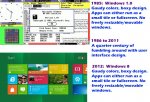


The browser wars might be firing up again in regards to RT.
http://weblogs.mozillazine.org/asa/archives/2012/05/firefox-on-windows-o.html
http://news.cnet.com/8301-1001_3-57...es-with-mozillas-windows-rt-browser-concerns/
http://weblogs.mozillazine.org/asa/archives/2012/05/firefox-on-windows-o.html
http://news.cnet.com/8301-1001_3-57...es-with-mozillas-windows-rt-browser-concerns/
Mercutio
Fatwah on Western Digital
Not so much firing up as "stopped dead in their tracks."
Windows on ARM doesn't seem that interesting to me. It's feature incomplete compared to real Windows, and just the fact that I now think of it as "real Windows" is problem enough. It's not going to be able to participate in a domain and it won't run legacy apps. So what good is it, besides a good way to kill the battery in something that has a tablet form factor more quickly than Android can. Maybe they'll make it interesting by having sweet, subsidized hardware, but I doubt that will be the case either.
Windows on ARM doesn't seem that interesting to me. It's feature incomplete compared to real Windows, and just the fact that I now think of it as "real Windows" is problem enough. It's not going to be able to participate in a domain and it won't run legacy apps. So what good is it, besides a good way to kill the battery in something that has a tablet form factor more quickly than Android can. Maybe they'll make it interesting by having sweet, subsidized hardware, but I doubt that will be the case either.
http://www.theverge.com/2012/5/16/3...browser?utm_source=dlvr.it&utm_medium=twitter
Looks like they caught the attention. I think Microsoft found a real loophole but what what do I know.
Looks like they caught the attention. I think Microsoft found a real loophole but what what do I know.
Mercutio
Fatwah on Western Digital
So this thing about how to get to the boot menu in Win8 seems like it might be interesting.
Maybe it's just me, but a boot menu I can't access without an already-started instance of Windows seems, I dunno, kinda idiotic.
But then, 2/10ths of a second is plenty of time to press F8 five or six times, right?
Maybe it's just me, but a boot menu I can't access without an already-started instance of Windows seems, I dunno, kinda idiotic.
But then, 2/10ths of a second is plenty of time to press F8 five or six times, right?
Chewy509
Wotty wot wot.
Re: Boot time.
Did I miss something, or don't modern BIOS maintain the keyboard buffer anymore? Or does the Win8 boot loader purge the keyboard buffer before offering the F8 option?
You see, in the olden days when we used steam powered computers with the blazing fast 8086 @ 4.77Mhz, if you pressed a key during the bios startup, if it wasn't needed for an option ROM, it was passed to the boot loader/OS when it read the keyboard input?

sechs
0
This is for UEFI only, right?

http://www.theverge.com/2012/5/16/3...browser?utm_source=dlvr.it&utm_medium=twitter
Looks like they caught the attention. I think Microsoft found a real loophole but what what do I know.
Seems ok to me. Windows RT has 0% marketshare currently and without Windows app backwards compatibility seems unlikely to capture more than say 5% of the market once released. So there is no monopoly being leveraged illegally. Compared to the PC desktop market where it has 90% etc, and was found to be abusive.
I just hold F8 down continuously until it takes. With the faster PCs these days trying to hit the window can be tricky.So this thing about how to get to the boot menu in Win8 seems like it might be interesting.
Maybe it's just me, but a boot menu I can't access without an already-started instance of Windows seems, I dunno, kinda idiotic.
But then, 2/10ths of a second is plenty of time to press F8 five or six times, right?
Mercutio
Fatwah on Western Digital
The final preview is available now. Apparently it's buggy as all hell and they're still dicking around with the start screen.

Bozo
0
Mercutio
Fatwah on Western Digital
If there is one issue we might point to in all this, it's that Microsoft is being moronic any time it decides to "shift focus to consumers."
Bozo
0
I installed Server 2012 with the GUI. It is actually comical to use. The desktop is straight from Windows 3.1! MS has made it harder to use Server 2012 as a work station operating system. But I'm sure there will be work-around.
Mercutio
Fatwah on Western Digital
Probably not. They'll just tell us to do everything with Powershell.
Bozo
0
Hmmm...Can't seem to get Chrome browser installed on Server 2012.
sechs
0
They'll fix it in the next version. When is Windows 9 due out?
Mercutio
Fatwah on Western Digital
There are a couple different issues that can keep Chrome, Picasa and the GChat desktop client from installing on Server 2008. One of them is a group policy change and the other is IIRC something to do with the uber-restrictive IE defaults on Windows Servers. At different times I've found different ways around these problems but I suspect that you've just run in to one or other of those things, Bozo. Basically Google's software seems to make assumptions that it's always going to run on desktops and it chokes when things are different from that.
Bozo
0
Bozo
0
It works. I am posting from Server 2012 using Google Chrome.
Chrome looks a little odd in Windows 3.1 motif. :roll:
Chrome looks a little odd in Windows 3.1 motif. :roll:

timwhit
0
I have a feeling Windows 8 will be less of a hit than Vista.
Mercutio
Fatwah on Western Digital
That's harsh. I suspect you're right, if only because the market for expensive computing devices has shifted to tablets that have reduced expectations and different-from-Windows functionality associated with them. I think there's a lot of morons who would rather have an $800 ithing than an $800 Windows tablet with all the attending security issues and/or crappy lack of legacy support.
Bozo
0
The company I work for is just now converting to Windows 7.
The company I work for is just now converting to Windows 7.
We are almost done, almost.

We are about 25% done. I plan a push to get everything to 7 before XP support ends. I was hoping to be able to go Linux before 7; I'm hoping that this will be the last MS OS I need to deploy.
Chewy509
Wotty wot wot.
We are about 25% done. I plan a push to get everything to 7 before XP support ends. I was hoping to be able to go Linux before 7; I'm hoping that this will be the last MS OS I need to deploy.
What's the hold-up with the migration?
Also, have you confirmed Linux (whatever distro you choose) will actually work in your environment? I've heard of some small scale deployments of 100% Linux environments (up to 30 PCs) being very, very successful, but anything larger tend to get saddled with Windows-only application requirements, especially in the area of accounting software, business management software, etc. (It's not the general Office software (Word processor, Spreadsheet, etc) that's the issue, it's the 100's of little legacy applications or customer written stuff that's the issue).
Having worked for a manufacturing company in the past, even some of the PLC software was Windows only! Let's not get started on the software for the lab equipment** or PABX!
**. The software would only run on Windows 2000 SP3, installation of SP4 would break the software, in that it would only run as the actual "Administrator" account, not even as an account in the Administrators group. No go on Windows XP, either.
Many of our vertical-market programs still won't work with anything beyond XP. I've already informed the vendors that if they don't have it resolved this year I'll be going to someone else. I've been working with many of our software companies to develop web-based clients that would be hosted either by them or by us. Worst case we could use some form of virtualization to keep the old stuff kicking around. As many have written about this kind of thing, it isn't about the cost. It is about all the troubles caused by licensing and imaging of clients.
Mercutio
Fatwah on Western Digital
Don't get me started on this crap.
I did have a productive discussion on the fact that I've managed to shepherd a customer into web-based solutions for everything they use except MS Office, something they barely need but think they have to have. I was able to demonstrate that their three most important tools work just fine on a 1280x800 tablet. They're about 75% paperless. They could in theory move to thin clients or client-agnostic systems and be fully functional.
I did have a productive discussion on the fact that I've managed to shepherd a customer into web-based solutions for everything they use except MS Office, something they barely need but think they have to have. I was able to demonstrate that their three most important tools work just fine on a 1280x800 tablet. They're about 75% paperless. They could in theory move to thin clients or client-agnostic systems and be fully functional.

mubs
0
The company I work for is just now converting to Windows 7.
I'm just now planning to move to Win-7

sechs
0
Windows is getting that Star Trek kind of feel, except that it's the odd ones that are good.
Seems useful.
The Metro hater's guide to customizing Windows 8 Consumer Preview
http://www.zdnet.com/blog/bott/the-metro-haters-guide-to-customizing-windows-8-consumer-preview/4610
The Metro hater's guide to customizing Windows 8 Consumer Preview
http://www.zdnet.com/blog/bott/the-metro-haters-guide-to-customizing-windows-8-consumer-preview/4610
http://windowsteamblog.com/windows/...07/02/upgrade-to-windows-8-pro-for-39-99.aspx
Should be much cheaper to upgrade, I wonder if they are worried about adoption rates?
Should be much cheaper to upgrade, I wonder if they are worried about adoption rates?
Mercutio
Fatwah on Western Digital
I suspect that unless sales numbers are absolutely stellar, the market will declare it a failure and furthermore we'll get a whole bunch of "the age of the PC is over" nonsense out of the tech press. I don't think Windows 8 is going to be particularly well received, but this could be the start of a trendline into irrelevance for Microsoft and I am more than willing to watch that happen.

Mercutio
Fatwah on Western Digital
No, ipads. Try to keep up. 
We will be creating work products on "The Cloud" from whatever generic platform happens to be in front of us. I suspect it will be running Android, but that doesn't matter too much.
Mercutio
Fatwah on Western Digital
No no no. It will specifically be ipads because the Androids don't do anything right. Apple said so and that means it must be true.